Review · Reappraisal · 1969 · Drama
Midnight CowboyThe Loneliness of Reinvention
John Schlesinger’s portrait of two outsiders reveals how quickly performance falls away when genuine human connection finally appears.
My rating7/10
Midnight Cowboy is one of those films that almost demands you meet it halfway. Watching it as someone born in 1994, I couldn’t help but feel my age showing. Certain moments belonged to an America that largely no longer exists, and for much of the runtime I wasn’t entirely sure whether I was missing the point because I lacked the historical context or because the film simply wanted me to sit with the uncertainty a little longer. By the end, I realized the history mattered far less than the emotions underneath it.
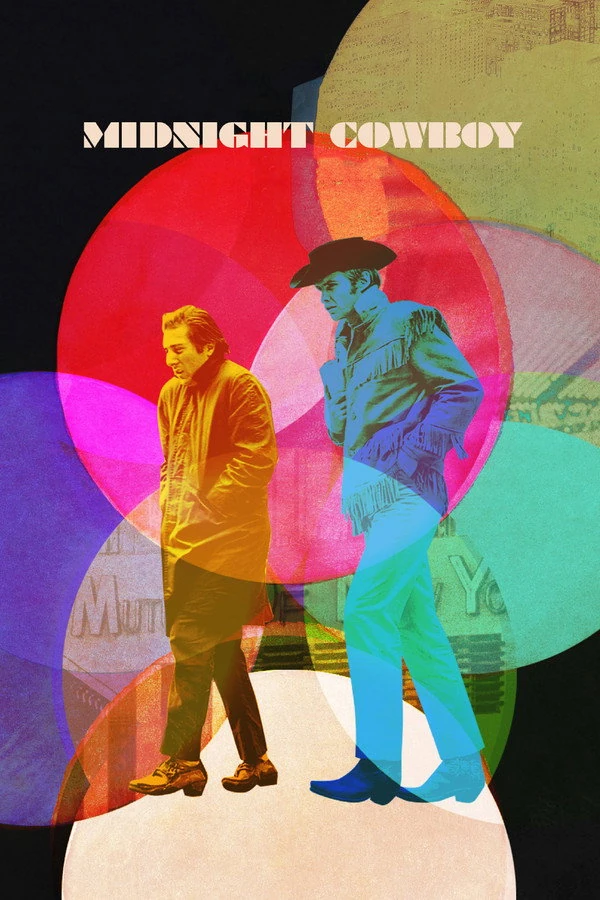
When I think of Joe Buck (Jon Voight — Deliverance (1972), Heat (1995), Holes (2003)), I still picture Mr. Sir from Holes. Likewise, seeing Enrico “Ratso” Rizzo (Dustin Hoffman — The Graduate (1967), Rain Man (1988), Meet the Fockers (2004)) immediately brought Bernie Focker to mind. I suppose that’s my age showing. Every generation discovers great actors through different films before eventually working backwards through their careers.
Joe arrives in New York convinced he’s going to be the hustler. Dressed in his cowboy outfit, he believes confidence alone can reinvent him. Instead, New York quietly reveals itself as the real hustler. Nearly everyone Joe encounters is selling something, manipulating someone, or simply trying to survive. The irony is that the man who believes he’s exploiting the city quickly becomes another victim of it.

The fragmented flashbacks puzzled me throughout much of the film, particularly the recurring images of the young woman telling Joe how special he is. Combined with later memories involving his grandmother and childhood, I eventually stopped viewing them as traditional flashbacks and started seeing them as fragments of emotional trauma rather than literal memories. They’re less interested in explaining Joe’s past than showing how those experiences continue to shape him.
“Joe is constantly performing masculinity.”
One scene that particularly stayed with me is when Joe reacts so strongly after his sexuality is questioned. I’m still unsure whether the film is suggesting he’s afraid of being gay, afraid of homosexuality itself, or simply terrified of anything that threatens the identity he’s spent his entire life constructing. What did feel clear to me is that Joe is constantly performing masculinity. His cowboy outfit, exaggerated confidence with women, and the way he carries himself all feel less like genuine self-assurance and more like someone desperately trying to convince both the world—and himself—that he belongs inside the image he’s created.
Joe’s repeated pep talks in the mirror quietly became one of my favorite details in the film. At first they almost play as confidence, but by the end they read as something much sadder. People who constantly have to remind themselves who they are are often fighting battles nobody else sees. It made me wonder whether Joe had been giving himself those speeches long before New York, using them to survive a loneliness that began much earlier in life.
As Ratso slowly becomes the emotional center of the story, something else began to happen: Joe gradually stopped performing. The cowboy image faded into the background, replaced by a friendship that asked nothing of him except to simply be present. I also found myself wondering whether Miami represented more than simply escaping poverty. To me, it symbolized the hope of finally becoming whoever each man truly wanted to be without constantly performing for everyone else. Whether that’s meant literally or simply emotionally, I appreciated that the film never forces one definitive interpretation.
The final journey between Joe and Ratso says more than pages of dialogue ever could. Watching Joe wrap his arms around Ratso during the bus ride reminded me how powerful genuine human connection can be. After spending the entire film chasing money, reinvention, and an identity that never quite fit, it turns out that friendship was the one thing either of them truly needed.
Walking away from Midnight Cowboy, I realized the historical references mattered far less than I initially thought they would. The America of 1969 may feel distant to someone born in 1994, but loneliness, identity, shame, friendship, and the desire to belong remain exactly the same. Times change. Human emotion doesn’t.